

Investigate repeated breaker trips
A breaker that trips repeatedly is a sign to investigate the circuit, not a reason to install a larger breaker without assessment. The cause may involve connected equipment, wiring, connections, or the breaker itself. We review the relevant installation and explain the findings before recommending the work. Breaker service may involve appropriate replacement rather than attempting to repair a sealed device internally. Tell us what equipment was operating when the problem occurred and whether other areas were affected. Do not remove the panel cover or handle internal components to gather information for the service request.
Define switch work around the actual equipment
Switch problems can involve the device, its connections, the equipment it controls, or another part of the circuit. We assess the affected installation before deciding what needs repair or replacement. Describe whether the switch works intermittently, feels loose, or produces unusual symptoms during normal operation. If you notice heat damage or a burning smell, avoid using it and mention the condition when you call. The replacement or repair scope should account for the actual equipment and applicable requirements. You approve the proposed pricing before work begins, with the findings explained in plain language.
Plan conduit routes that fit the installation
Conduit work needs to account for the route, the environment, supporting surfaces, and the electrical installation it will serve. A neat appearance matters, but it is only part of the job. We review the proposed path and the access needed to carry out the work before defining the scope. Share drawings, equipment locations, and any restrictions on exposed routes or working areas. Conduit bending may support new construction, renovations, or changes to an existing installation. We complete the agreed work to applicable code and safety requirements, with pricing approved before the project starts.
FROM OUR PROJECT PHOTOGRAPHS
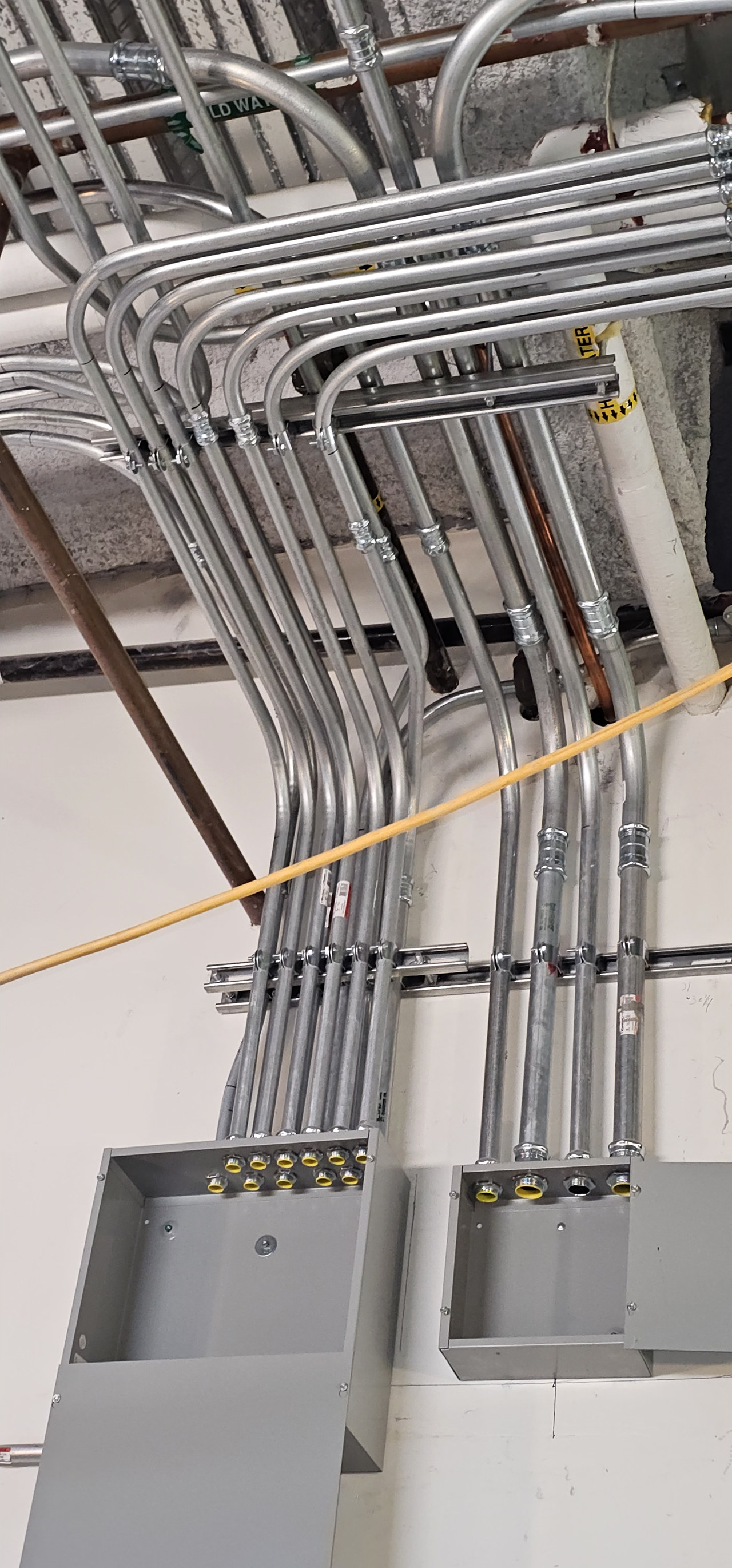
Commercial EMT conduit rough-in
Parallel EMT conduits with curved bends enter electrical enclosures beneath an unfinished commercial ceiling. The photograph shows the routing at rough-in, before the ceiling is closed.
- Commercial electrical work
- EMT bends and routing
- Rough-in stage
Common questions
Can a larger breaker stop repeated tripping?
A larger breaker is not an appropriate shortcut for a circuit that keeps tripping. The circuit and connected equipment need assessment, and protection must suit the installation. We investigate the cause and explain the repair scope. Do not replace breakers or alter panel components yourself.
Do you repair breakers internally?
Breaker service generally involves assessing the circuit and determining whether appropriate replacement is needed, rather than opening a sealed breaker for internal repair. We review the equipment and installation before recommending work. The proposed scope identifies what will be addressed and the price for your approval.
Can you provide conduit work for a larger construction project?
Yes. Conduit bending is part of our electrical services and can be included in a construction or renovation scope. Share the drawings, equipment locations, intended routes, and site restrictions. We review those details before defining the installation, related work, and project pricing for approval.
Technical planning notes & references
BEFORE WE QUOTE THE WORK
Breakers, wiring and conduit need to work together
Find the reason for the trip
A breaker can respond to overload, a short circuit, a ground fault or another equipment condition. Increasing its rating without assessing the circuit can leave conductors improperly protected. Establish connected loads, conductor condition and equipment compatibility before selecting a repair.
Plan the raceway route
Conduit is the protective pathway for wiring, rather than plumbing pipe. Electrical metallic tubing, rigid raceway and nonmetallic raceway have different uses. Exposure, supports, bends, pull points, fill and bonding affect the design. Outdoor and underground runs need components suited to the conditions.
Include access and finishes
A neat exposed conduit layout should allow access to doors, equipment and service areas. Concealed runs may involve opening finishes. Clarify penetrations, firestopping, trenching and restoration before work begins, including which tasks belong to other trades.